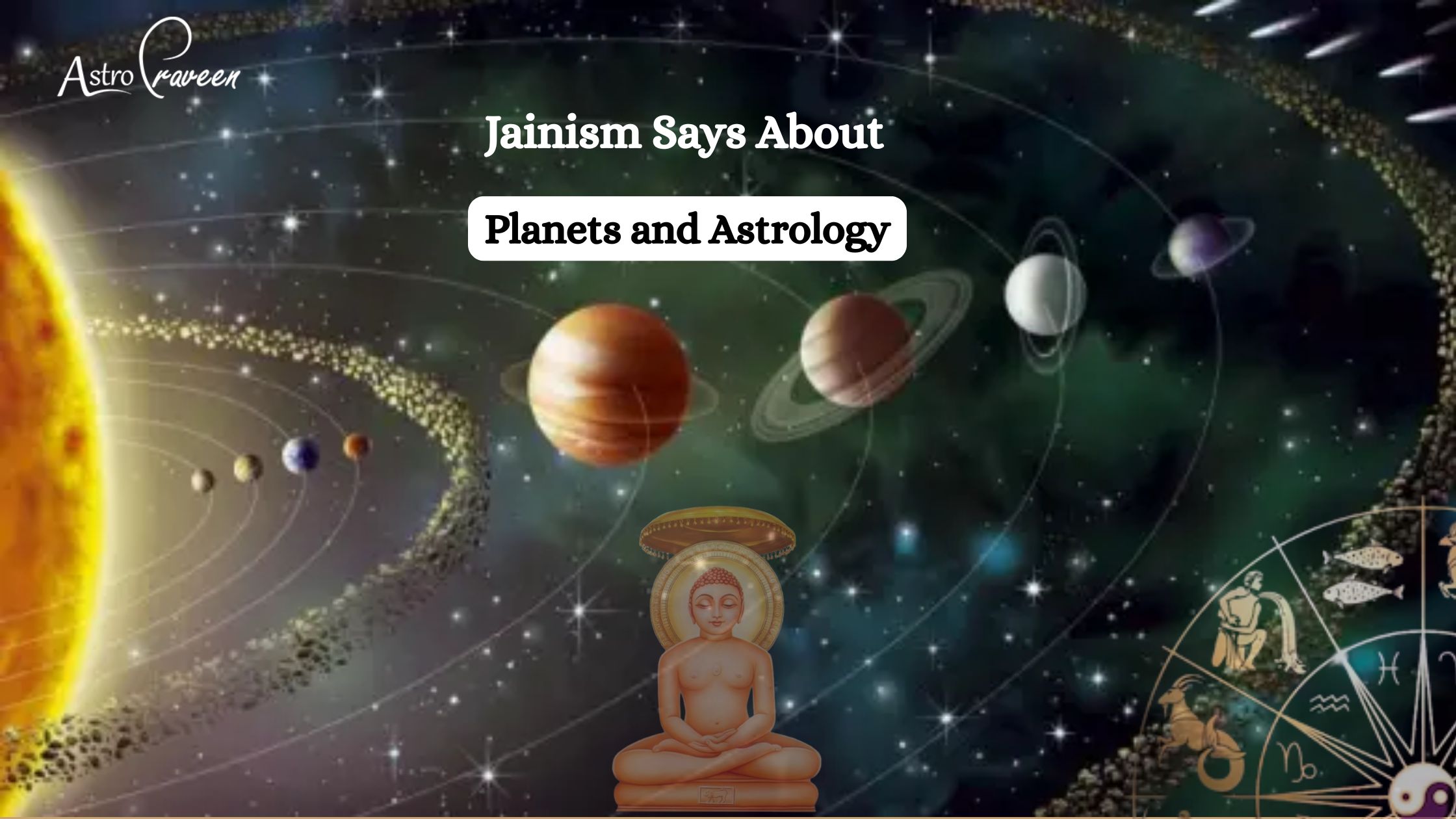
You know that little moment when you peek at your horoscope and whisper, “Is Mercury retrograde messing up my phone battery again?” Well — if you’re also someone who follows Jainism, you might pause and ask: What does Jainism say about this whole planets-and-astrology thing? Spoiler: it’s not totally what mainstream horoscope columns suggest.
Let’s have a down-to-earth chat about jainism astrology planets, how they fit (or don’t) in Jain thought, and what that means for you when you’re checking a kundali milan by date of birth or dealing with a jainism wedding.
Astrology Through a Jain Lens
In many traditions, astrology treats planetary positions as direct drivers of our fate. But in Jainism the emphasis shifts. The website for Jain astrology explains that in this system, planets can’t cause events independently — it’s the past actions (karma) of the soul that set the stage.
For instance, when a Jain astrologer reads a horoscope, they look at how planetary positions mirror previous karma—not as the planets doing something, but as the outcome of something. According to one article:
“Astrology in Jainism takes a unique route and predicts the condition of human life, but not from the time-based perspective of planetary influences.”
Furthermore, Jain tradition adds a nuance: when the soul leaves a body, there’s a transitional phase (three to four prahars) before the next birth. This affects how the exact time of birth is considered when drawing charts.
So yes, planets are acknowledged — but they’re reflections of karma, not celestial puppeteers.
How Nine Planets (and More) Fit into Jain Thinking
When we talk nine planets astrology (Navagraha) many think of Vedic rituals, temples, gemstones. Jain texts and modern Jain-astrology services include similar celestial bodies: Sun, Moon, Mars, Mercury, Jupiter, Venus, Saturn, Rahu, Ketu.
Here’s how Jain tradition links them: worship of certain Tīrthaṅkaras or powerful souls is recommended in connection with planetary influences. For example:
- Sun → Swami Padma Prabhu
- Moon → Swami Chandra Prabhu
- Mars → Lord Vasupujya
- Saturn → Lord Munisuvrat
- Rahu → Lord Neminath
And so on. It’s not exactly “please planet X for riches,” but “connect with the spiritual correlate of this planet’s energy.”
Also worth noting: Jain-astrology literature speaks of the “Panch Samvay” — five factors that work together: Kaal (time), Swabhav (nature/disposition), Purakrit (past karma), Niyati (inevitability) and Purusharth (effort).
That’s important because it places human effort alongside the cosmic and karmic.
Also Read – How Jainism and Buddhism Differ In Beliefs And Practices
Why Many Jains Still Look at Astrology
If you’re thinking, “So if planets don’t control my fate, why bother with astrology?” the answer is: there are practical, emotional, and cultural reasons.
1. Cultural rituals around a jainism wedding
Even though Jain doctrine emphasises inner work, many families still follow horoscope matching and planetary timing for weddings. It bridges tradition, anxiety and social harmony.
2. Guidance and orientation
Having a birth chart and knowing planetary positions gives a framework: when to act, when to pause. It doesn’t guarantee anything, but offers insight. According to one source: “You cannot escape your positive or negative karma.”
3. Definitions of remedy and discipline
Jain-astrology services promote mantras, rituals and practices tied to planetary or karmic blocks. For example the mantra “Om Asiya Usaay Namah” is mentioned for Navagraha dosha.
Interplay with other services like kundali milan by date of birth, love problem solution and even vaastu consultancy. Many seekers combine these to find holistic support.
God, Free Will and the Planets: What Jainism Insists On
People often ask “Does Jainism believe in a God who controls the planets?” The short answer: No, not in the way many familiar religions do. Jainism distinguishes between souls (and spiritual principles) and creator-God ideas.
- The planets are not gods themselves, nor do they have arbitrary power to decide your fate.
- Your actions (karma) matter more than planetary positions.
- A liberated soul (a Jain “god”) is one free from karma, not someone who manipulates fate.
In other words, you still have free will (Purusharth) and your inner state counts. The planets can show you the map, but you have to walk the terrain.
Also Read – Who Established Jainism and How It Shaped Indian Philosophy
How to Use Planetary Insight as a Jain Practitioner
If you’re someone who values both astrology and Jain wisdom, here’s a practical approach:
- Read your chart not with fear, but curiosity. Let planetary positions reflect karmic patterns.
- Focus on effort: Use the concept of Purusharth—daily practice, kindness, self-reflection.
- Apply remedies wisely: If a practitioner suggests ritual, mantra or meditation, make sure it aligns with Jain ethics — non-violence, truth, purity.
- Don’t skip inner work: No matter how favourable your chart, improvement comes from inner transformation.
- See compatibility: Before a wedding match (kundali milan by date of birth), use charts as supportive tools — but don’t let them overshadow values, communication and shared commitment.
- Environmental harmony: If you’re doing vaastu consultancy or aligning your home, treat it as energy-adjustment—not fear-based appeasement of planets.
Final Thoughts
Here’s the takeaway: The planets are part of your story, but they are not the authors. Jainism teaches that karma writes your life script, and the planets act as signposts, not controllers.
When you combine mindful astrology with the values of Jainism — compassion, responsibility, discipline, inner freedom — something shifts. You stop being a passive victim of planetary whims and start becoming an active co-creator of your life.
So next time you check your horoscope, remember: Yes, the stars might speak — but you’re the one choosing how to respond. And if you ever feel stuck, maybe explore the depth of your karma, revisit your intentions, and bring a little more clarity to your path.
Let your inquiry be rooted in faith—not fear. The cosmos is vast, but your soul is deeper.
FAQs
- Does Jainism accept astrology?
Yes, Jainism accepts astrology but interprets it differently: the planets reflect past karma rather than cause destiny.
- Are the nine planets important in Jain astrology?
Ans. They are acknowledged (Sun, Moon, Mars… Rahu, Ketu) and connected to Jain spiritual figures, but they don’t have independent power to decide fate.
- Can Jains perform planetary worship rituals?
Ans. Some practices exist in Jain-astrology contexts, such as invoking mantras and paying homage to Tīrthaṅkaras linked to planets — yet the focus is karmic purification.
- Why is Kundali matching still used in Jain weddings?
Ans. Mainly because of sociocultural traditions, family expectations, and the desire for compatibility insight — even if the philosophical emphasis remains on karma.
- Who is considered God in Jainism?
Ans. In Jainism, a “god” is a soul that has achieved perfect knowledge and freedom (Kevala-jnana) — not a creator deity who controls planets or fate.