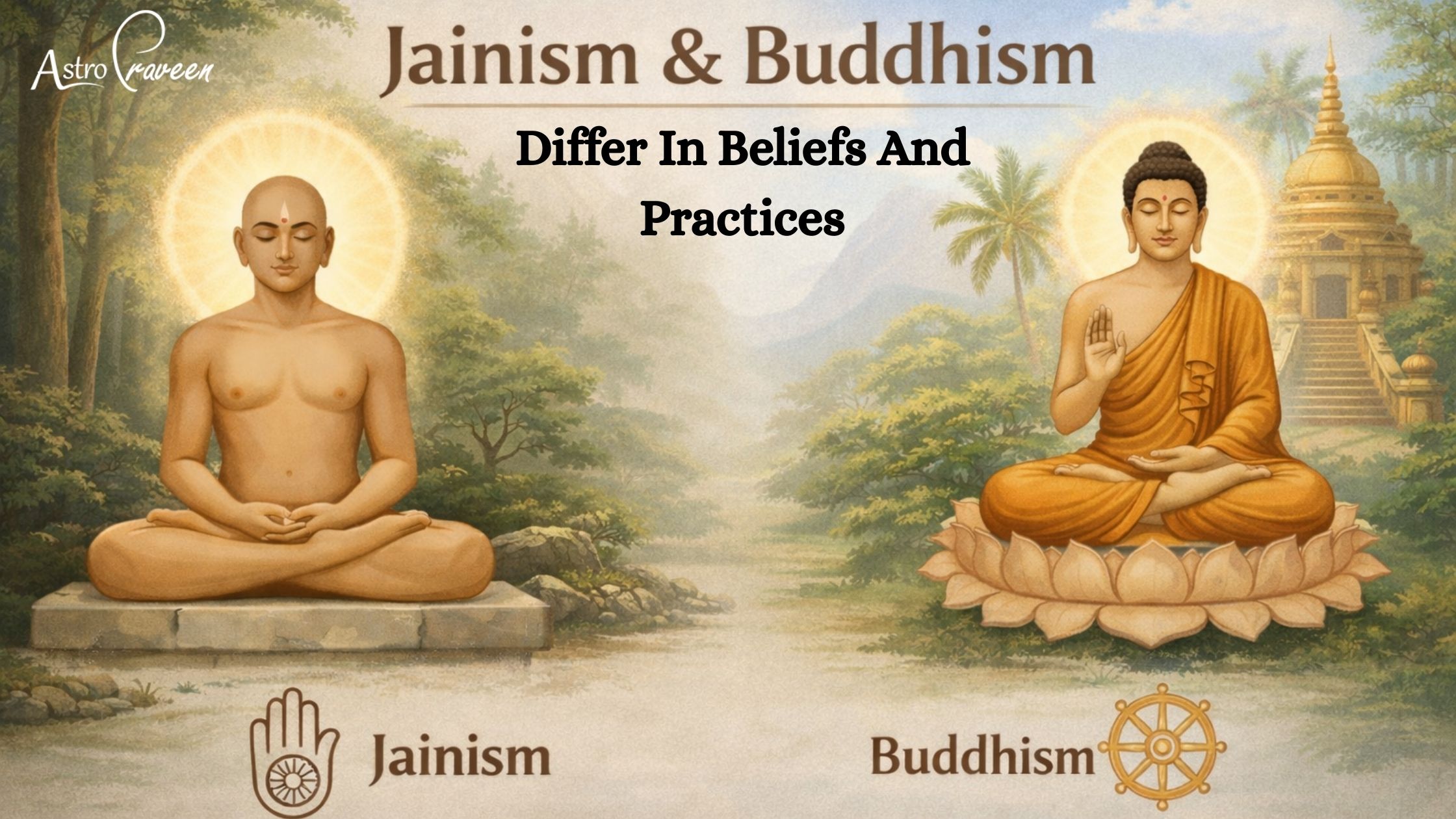
Some questions stay with you for years. One of them is this: how can two ancient Indian traditions feel so close and still be so different? Jainism and Buddhism often sit next to each other in textbooks, in conversations, even in spiritual circles. But the moment you start exploring them with a little curiosity, you notice that each one carries its own voice, its own heartbeat, its own way of looking at life.
Both paths rose during a time of deep social change. People were tired of rituals. Many felt lost. Many wanted answers that felt real. Out of that search came two powerful ideas. One shaped by Mahavira. The other shaped by Buddha. They walked on the same land. Saw the same suffering. Yet arrived at two very different understandings.
Let’s walk through their stories together. Steady. Clear. And with a bit of warmth.
Where Jainism And Buddhism Begin
Jainism speaks through a long line of twenty four Tirthankaras. Mahavira was the last. He organised the teachings. He shaped its discipline. He offered a path built around purity and non-violence.
Buddhism begins with Siddhartha Gautama. A prince who walked away from comfort and tried to understand why people suffer. His search led him to enlightenment. It also gave the world a new way to think about pain, desire, and freedom.
Both traditions challenged old systems. Both invited people to look inward. But their core purpose felt slightly different. Mahavira encouraged absolute control over actions. Buddha encouraged calm awareness of the mind.
The difference may look small. But it changes everything.
Karma In Jainism And Buddhism
People often say the two speak the same language. They do not. Especially when it comes to karma.
Jainism believes karma acts like tiny particles. They stick to the soul whenever someone thinks, reacts, or harms. These particles bind the soul. Liberation happens only after burning them off with discipline and non-violence.
Buddhism treats karma as intention. Nothing physical. No particles. Only the effect of thoughts and choices. What you create inside shapes what you experience outside.
One focuses on cleansing the soul. The other focuses on transforming the mind.
Also Read – What Is Jain Astrology and How Is It Different from Vedic Astrology?
Soul Or No Soul: A Big Line Between The Two
This single difference separates Jainism and Buddhism more than anything else.
Jainism teaches that the soul is real. Eternal. Individual. Every living being carries a jiva filled with infinite potential.
Buddhism says the opposite. It teaches anatta. No permanent soul. No fixed “I”. Only changing processes like consciousness, sensations, and thoughts. Everything flows. Nothing stays the same.
This one idea shapes how each tradition looks at rebirth, liberation, and identity.
How They View Divine Beings
Jainism accepts the existence of perfect beings called Siddhas. They are liberated souls. They are not creators. They simply show the path.
Buddhism does not centre itself around a god. It speaks about enlightened beings. Teachers. Guides. But never a creator who controls human fate.
This keeps the Buddhist path very personal. Your mind. Your practice. Your awakening.
How People Practise Each Tradition
You may have seen a Jain monk on a quiet morning. Barefoot. Gentle. Careful with every step. Their lifestyle is incredibly disciplined. They avoid harming even the smallest life forms. Their eating patterns, travel patterns, and interactions all follow strict vows.
Lay followers practise softer versions. Still disciplined. Still conscious. But more flexible.
Buddhist practice is different. It revolves around meditation. Mindfulness. Compassion. Ethical living. The tone is calm and observant. The body is disciplined, but the mind receives more attention than the physical rules.
Jainism purifies through restriction. Buddhism purifies through awareness.
Both work for the right person.
Jainism And Buddhism Similarities
Despite their strong differences, they meet at many points.
- Both invite people to rise beyond social boundaries.
- Both minimise rituals.
- Both encourage compassion.
- Both value personal effort.
- Both talk about liberation from rebirth.
These shared ideas helped them spread quickly in ancient India. People connected with the simplicity and kindness in both.
A Simple Comparison Of Jainism And Buddhism
Here is a clear snapshot:
Soul
- Jainism: Soul exists. Eternal and individual.
- Buddhism: No permanent soul.
Karma
- Jainism: Physical particles bind to the soul.
- Buddhism: Intention creates effect.
Liberation
- Jainism: Achieved through intense discipline and non-violence.
- Buddhism: Achieved through wisdom, meditation, and insight.
Divine concept
- Jainism: Accepts liberated beings. No creator.
- Buddhism: Non-theistic. Personal effort matters most.
Path
- Jainism: Severe self-control.
- Buddhism: Middle Path with balance and mindfulness.
It’s like two students preparing for the same exam with very different study methods.
Also Read – Arrange Marriage vs Love Marriage Impact on Relationships and Happiness
How These Traditions Shape Modern Life
You don’t need to be a monk to feel their influence. Their teachings appear everywhere. In daily habits. In the words people use. In the way families think about kindness or karma.
Jainism deeply influences India’s vegetarian culture. Many families choose peaceful eating because of this tradition.
Buddhism influences global wellness. Meditation. Mindfulness workshops. Mental health practices. Many of these flow from Buddhist roots.
Both are ancient. Yet surprisingly modern.
Why Their Differences Still Matter Today
We live in a world that feels rushed and noisy. People want clarity. Peace. Purpose. Understanding the difference between Jainism and Buddhism helps people choose what fits their nature.
Some feel drawn to discipline. Others connect with meditation. Some want structure. Others want inner calm. Both traditions offer powerful tools for living with more awareness.
Learning about them isn’t just academic. It’s personal. It helps you understand your own inner world.
Conclusion
Jainism and Buddhism grew from the same soil. They speak to the same human longing for peace. Yet they walk in different directions.
Jainism reminds you to act with absolute care. Buddhism reminds you to observe with steady awareness. One polishes the soul through discipline. The other softens the mind through wisdom. Both lead toward freedom.
Two rivers. Two moods. One ocean of wisdom.
If you ever feel lost on your spiritual path, exploring these traditions can bring surprising comfort. Sometimes, all you need is a quiet moment and an open heart to find clarity.
FAQs
- Are Jainism and Buddhism similar?
They share values like compassion and inner effort. But they differ on the soul, karma, and their approach to liberation.
- What is the main difference between Jainism and Buddhism?
Jainism believes in an eternal soul. Buddhism teaches there is no permanent self.
- Why did the rise of Jainism and Buddhism happen at the same time?
People were questioning old rituals and social structures. Both traditions offered fresh answers.
- Is Buddha connected to Jain teachings?
Ans. No. Both developed independently, though they emerged during the same period.
- Can someone learn from both paths?
Yes. Many people blend the practical wisdom of both based on what feels right for their personal journey.